

August 20, 2026

A Quick Guide to IPOs
We love writing about rockets, artificial intelligence, and space in general, this piece is not about SpaceX, Anthropic, or any individual company. Instead, it examines a broader question: what does history tell us about investing in IPOs?

The IPO story is often strongest on day one but much weaker over time. Since 2000, U.S. IPOs have generated an average first-day return of 19.1%, yet more than half of all IPOs since 1975 have posted negative returns over the subsequent three to five years.
Exceptional IPO winners are rare. For every Amazon-like success story that generated returns above 1,000%, investors encountered roughly 40 IPOs that failed to produce a positive five-year return.
IPO performance is closely tied to the monetary cycle. Periods of falling interest rates, abundant liquidity, and strong investor enthusiasm have fueled powerful IPO booms, but those same conditions have often been followed by weaker post-listing returns, making market timing almost as important as company fundamentals.
Time really flies. Just two months ago, investors were celebrating the arrival of a new generation of technology listings. SpaceX (SPCX) completed one of the most anticipated Initial Public Offerings (IPOs) in recent history, and markets were waiting for the public listings of artificial intelligence leaders such as Anthropic and OpenAI. Yet only a few weeks later, reality has proven less straightforward. Of the three highly anticipated names, only one ultimately reached public markets, and its performance has fallen short of the extraordinary expectations that surrounded it.
While we love writing about rockets, artificial intelligence, and space in general, this piece is not about SpaceX, Anthropic, or any individual company. Instead, it examines a broader question: what does history tell us about investing in IPOs?
IPOs are particularly fascinating because they sit at the intersection of corporate ambition and investor optimism. Every public listing represents a company’s belief that now is the right time to raise capital, while simultaneously reflecting investors’ willingness to finance an uncertain future. Following years of market concentration and slow IPO activity, the prospect of new listings generated considerable excitement. Investors saw an opportunity to participate in the emergence of the economy of the future. SpaceX, Elon Musk’s aerospace company and one of the most closely watched public listings in decades, initially appeared to validate those expectations. Shares rose nearly 19% on their first trading day, just to trade almost 33% below its offer price two months later. Such volatility can be attributed to many factors, including valuation concerns, changing expectations, company fundamentals, or simple speculation. Yet when viewed through a historical lens, the pattern appears remarkably familiar.
Every IPO tells two stories. The first is the company’s story: its products, growth prospects, profitability, and competitive advantages. The second is the market’s story: investor sentiment, liquidity conditions, interest rates, and the willingness of investors to fund future growth. Companies pursue IPOs for many reasons, but all share a common objective: raising as much capital as possible. Some companies go public because they are ready. Others go public because the market is ready for them, and history suggests this distinction matters.
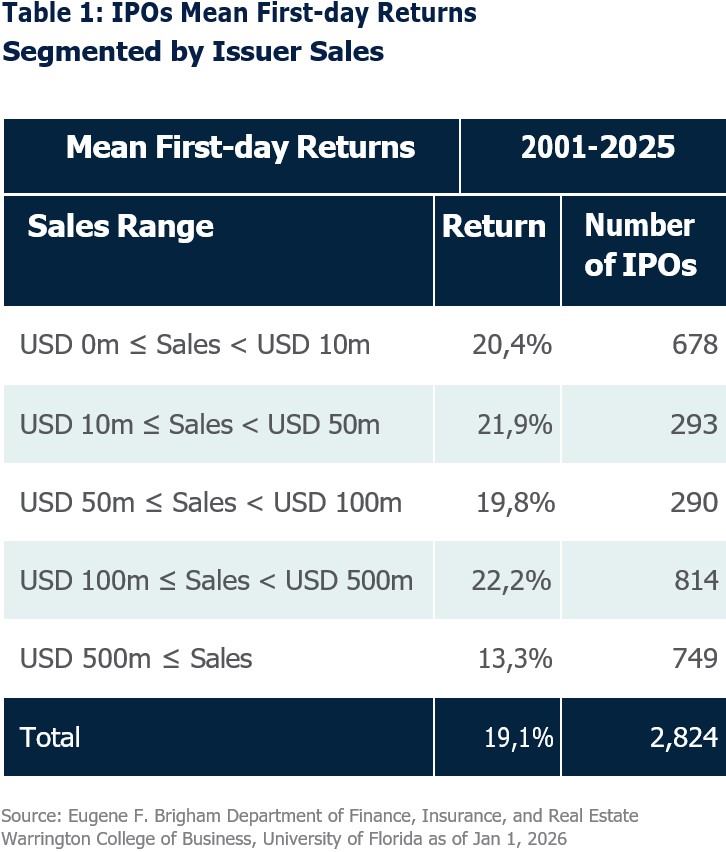
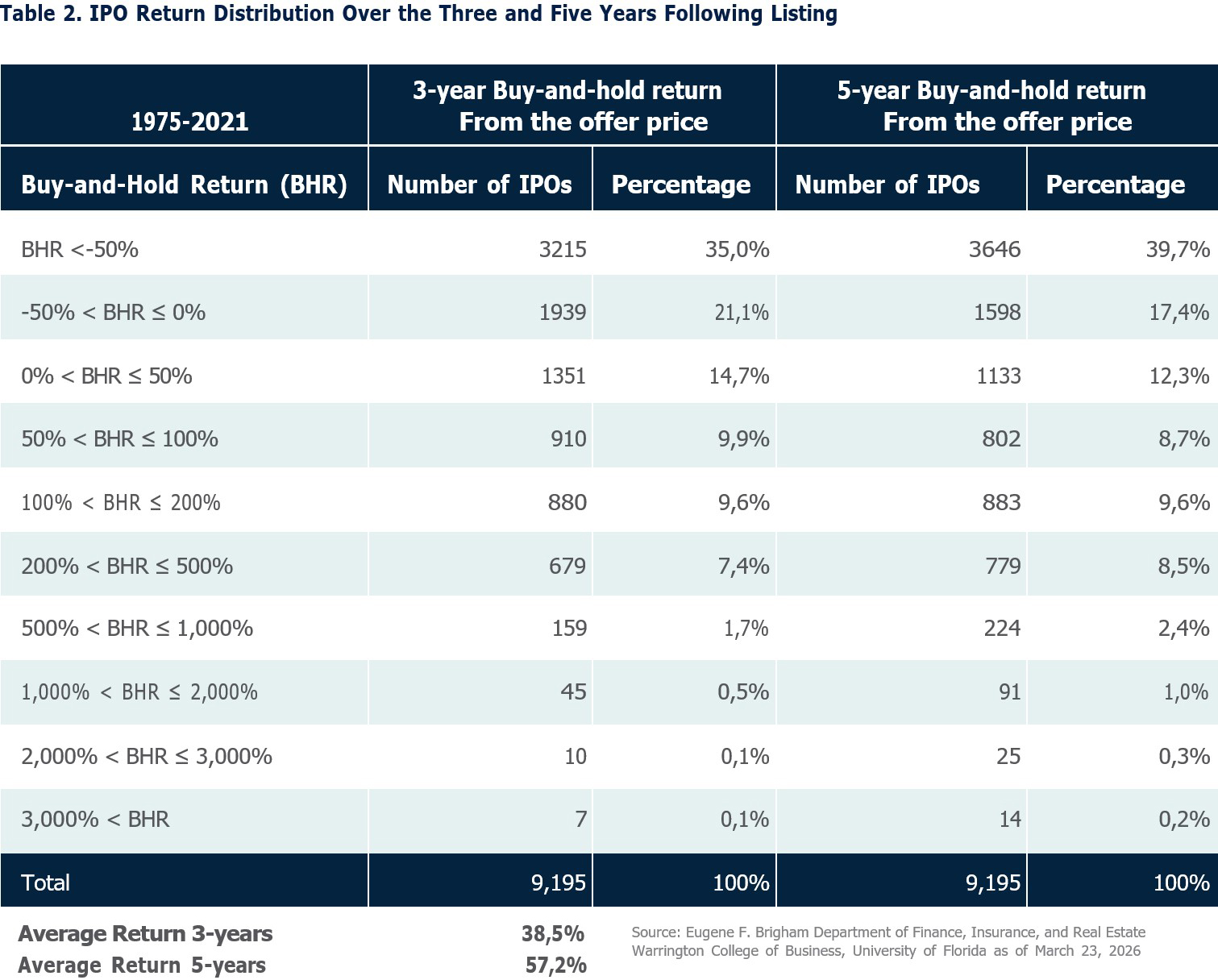
As shown in Table 1, IPO investors have historically been rewarded on the first day of trading. Using data from Warrington College of Business, since the beginning of the century, a universe of 2,824 U.S. IPOs generated an average first-day return of 19.1%, regardless of industry, profitability, or revenue profile. However, the same cannot be said about long-term performance. After examining 9,195 common-stock IPOs between 1975 and 2021, a very different picture emerges. More than half of all newly listed companies generated negative returns over the three to five years following their debut. As shown in Table 2, approximately 56.1% of IPOs produced negative returns during their first three years as public companies, while 57.1% generated negative returns over the subsequent five years. By contrast, only a relatively small fraction delivered truly exceptional outcomes.
The distribution of returns reveals an uncomfortable reality about IPO investing. Success stories dominate headlines, but they are exceedingly rare. For every IPO that became an Amazon-like-success story, 40 IPOs failed to generate a positive return over the following five years. The challenge for investors has never been finding IPOs. It has been finding the right one. Ready or not, since 1975, companies have been raising capital via IPOs while markets have been heavily betting on finding that one exceptional success story. But what happens when we look at the bigger picture?
Have you ever walked into a store, found everything on sale, and immediately became suspicious? IPOs often work in a surprisingly similar way.
As mentioned before, companies look to raise the most amount of capital possible. That task becomes significantly easier when interest rates are falling, liquidity is abundant, and the economic outlook is constructive. In other words, when capital is available. Viewed from this perspective, IPO activity becomes more than a measure of corporate growth. It becomes a reflection of the broader monetary cycle. By looking at Graph 1, we can identify different monetary regimes, each telling a different chapter of the U.S. economy.
The 1980s were marked by high inflation, elevated interest rates, and expensive capital, resulting in modest post-IPO returns of roughly 3%. Conditions improved dramatically in the 1990s as falling rates, economic expansion, and the rise of the internet fueled investor optimism and pushed average first-year IPO returns to approximately 15%. That optimism eventually became euphoria, and the collapse of the dot-com bubble, followed by the Global Financial Crisis, produced a decade of negative post-IPO performance.
Following the 2008 crisis, central banks introduced near-zero interest rates and quantitative easing, flooding markets with liquidity and supporting another strong period for IPOs. The 2010s generated average first-year
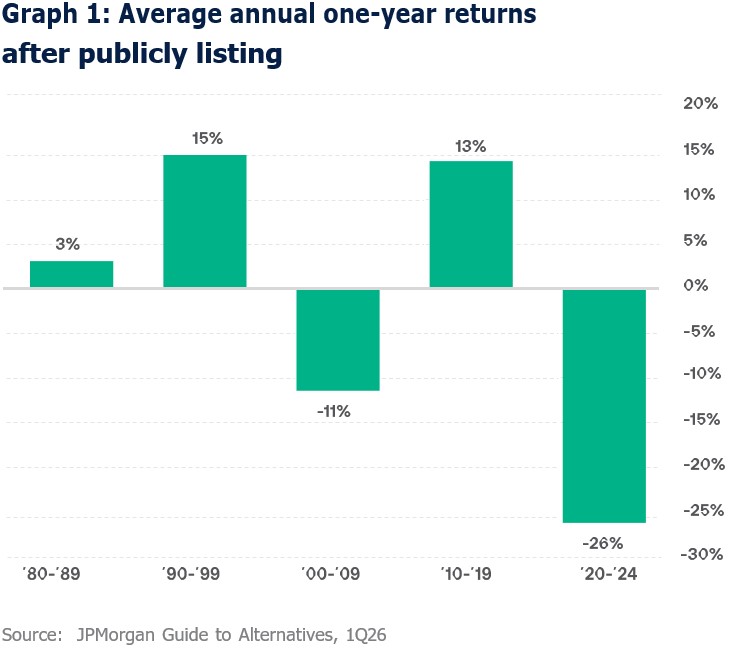 returns of approximately 13%, nearly matching the 1990s. The cycle peaked during the pandemic, when ultra-low rates and massive stimulus fueled a record IPO boom. As inflation returned after the pandemic, the Federal Reserve aggressively raised rates, increasing the cost of capital and pressuring growth companies. The result was the weakest IPO cohort on record, with the 2020-2024 group posting average first-year returns of -26%.
Paradoxically, the best environments for companies to go public have often been the worst for investors to buy them. Periods marked by abundant liquidity, rising valua-tions, and strong investor enthusiasm have repeatedly fueled IPO booms, only to be followed by weaker post-listing returns. In that sense, excitement has often been a surprisingly reliable contrary indicator in IPO history.
One of the most common mistakes investors make when evaluating IPOs is treating them solely as company-specific events. Strong management teams, innovative
products, and rapidly growing revenues undoubtedly matter. However, the historical record suggests that valuation and timing matter as well. A high-quality company entering public markets at the wrong stage of the economic cycle may generate disappointing investment returns, while a less exceptional business launched during a period of abundant liquidity may initially thrive. The history of IPOs is therefore not merely a story about corporate success and failure. It is also a story about monetary policy and capital availability. Periods characterized by falling interest rates, abundant liquidity, and expanding investor optimism have generally supported stronger post-listing performance. Conversely, periods marked by tighter financial conditions, valuation corrections, or excessive enthusiasm have often generated disappointing outcomes.
The relevance of this discussion extends well beyond SpaceX. If improving financing conditions and growing excitement around artificial intelligence lead to a new wave of public listings over the coming years, investors may once again be presented with compelling growth stories and transformative technologies. After all, the first trading day is often spectacular. The following 1,825 days are where the real investment case is tested. Looking back, everything seems obvious. However, as we anticipate an increasing number of artificial intelligence IPOs, and with Anthropic continuing to tease the market with a potential public debut, we must ask ourselves: where are we in the economic cycle?
Insigneo” and “Insigneo Wealth” are brand names used by Insigneo Financial Group, LLC and its affiliates. Brokerage products and services are offered through Insigneo Securities, LLC, a broker-dealer, registered with the U.S. Securities and Exchange Commission (“SEC”) and a member of FINRA and SIPC. Investment advisory products and services are offered through Insigneo Advisory Services, LLC, an SEC-registered investment adviser. Because we operate through various affiliates in different locations, please visit https:// insigneo.com/legalentities/ to understand which entity you are working with and what that means for you. This material should not be construed as an offer to sell or the solicitation of an offer to buy a security. It is for general information purposes only. To the extent that this material discusses general market activity, industry or sector trends or other broad-based economic or political conditions, it should not be construed as research investment advice. To the extent that it includes references to securities, those references do not constitute a recommendation to buy, sell or hold such security. It does not constitute a recommendation or a statement of opinion, or a report of either of those things and does not, and is not intended, to consider the particular investment objectives, financial conditions, or needs of the individual investors.
Not All Risks Are Disclosed – Past performance is not indicative of futures results. Investment involves significant risk, and it is possible to lose some or all of your principal investments and therefore may not be suitable for everyone. Always consider whether any investment is suitable for your particular circumstances and, if necessary, seek professional advice from your Investment Professional. This material may contain opinions, expressions an estimated that represent the analysis and perspective of Insigneo Securities, LLC’s Investment Strategy Department or its providers at the time of publication. These are subject to change at any time without notice.
Insigneo Asesorías Financieras SPA se encuentra inscrito en Chile, en el Registro de Prestadores de Servicios Financieros de la Comisión para el Mercado Financiero. Este informe fue efectuado por área de Research & Strategy de Insigneo Securities LLC. o sus proveedores, en base a la información disponible a la fecha de emisión de este. Para evitar cualquier conflicto de interés, Insigneo Securities LLC dispone que ningún integrante del equipo de Research & Strategy tenga su remuneración asociada directa o indirectamente con una recomendación o reporte específico o con el resultado de una cartera. Aunque los antecedentes sobre los cuales ha sido elaborado este informe fueron obtenidos de fuentes consideradas confiables, no podemos garantizar la completa exactitud e integridad de estos, no asumiendo responsabilidad alguna al respecto Insigneo Securities LLC, Insigneo Asesorías Financieras SPA ni ninguna de sus empresas relacionadas. Este material está destinado únicamente a facilitar el debate general y no pretende ser fuente de ninguna recomendación específica para una persona concreta. Por favor, consulte con su ejecutivo de cuentas o con su asesor financiero si alguna de las recomendaciones específicas que se hacen en este documento es adecuada para usted. Este documento no constituye una oferta o solicitud de compra o venta de ningún valor en ninguna jurisdicción en la que dicha oferta o solicitud no esté autorizada o a ninguna persona a la que sea ilegal hacer dicha oferta o solicitud. Las inversiones en cuentas de corretaje y de asesoramiento de inversiones están sujetas al riesgo de mercado, incluida la pérdida de capital. La información base del presente informe puede sufrir cambios, no teniendo Insigneo Securities LLC ni Insigneo Asesorías Financieras SPA la obligación de actualizar el presente informe ni de comunicar a sus destinatarios sobre la ocurrencia de tales cambios. Cualquier opinión, expresión, estimación y/o recomendación contenida en este informe constituyen el juicio o visión de área de Research & Strategy de Insigneo Securities LLC. o sus proveedores, a la fecha de su publicación y pueden ser modificadas sin previo aviso.
Insigneo Asesor Uruguay S.A. está inscripto en el Registro de Mercado de Valores del Banco Central del Uruguay como Asesor de Inversiones. En Uruguay, los valores están siendo ofrecidos en forma privada de acuerdo al artículo 2 de la ley 18.627 y sus modificaciones. Los valores no han sido ni serán registrados ante el Banco Central del Uruguay para oferta pública. Este material está destinado únicamente a facilitar el debate general y no pretende ser fuente de ninguna recomendación específica para una persona concreta. Por favor, consulte con su ejecutivo de cuentas o con su asesor financiero si alguna de las recomendaciones específicas que se hacen en este documento es adecuada para usted según su perfil y estrategia de inversión. Este documento no constituye un asesoramiento ni una recomendación u oferta o solicitud de compra o. Las inversiones en valores negociables están sujetas al riesgo de mercado, incluida la pérdida parcial o total del capital invertido. Cualquier opinión, expresión, estimación y/o recomendación contenida en este informe constituyen el juicio o visión de área de Research & Strategy de Insigneo Securities LLC. o sus proveedores, a la fecha de su publicación y pueden ser modificadas sin previo aviso. Rentabilidades históricas de los productos anunciados no aseguran rentabilidades futuras.
Insigneo Argentina S.A.U. Agente Asesor Global de Inversión se encuentra registrado bajo el N° 1053 de la Comisión Nacional de Valores (CNV) e inscripto ante la Inspección General de Justicia (IGJ) bajo el N° 12.278 del Libro 90, Tomo –, de Sociedades por Acciones. Este informe fue efectuado por área de Research & Strategy de Insigneo Securities LLC. o sus proveedores, en base a la información disponible a la fecha de su emisión. Para evitar cualquier conflicto de interés, Insigneo Securities LLC dispone que ningún integrante del equipo de Research & Strategy tenga su remuneración asociada directa o indirectamente con una recomendación o reporte específico o con el resultado de una cartera. Aunque los antecedentes sobre los cuales ha sido elaborado este informe fueron obtenidos de fuentes consideradas confiables, no podemos garantizar la completa exactitud e integridad de estos, no asumiendo responsabilidad alguna al respecto Insigneo Securities LLC, Insigneo Argentina S.A.U. ni ninguna de sus empresas relacionadas. La información base del presente informe puede sufrir cambios, no teniendo Insigneo Argentina S.A.U. la obligación de actualizar el presente informe ni de comunicar a sus destinatarios sobre la ocurrencia de tales cambios. Este material está destinado únicamente a facilitar el debate general y no pretende ser fuente de ninguna recomendación específica para una persona concreta. Por favor, consulte con su ejecutivo de cuentas o con su asesor financiero si alguna de las recomendaciones específicas que se hacen en este documento es adecuada para usted. Este documento no constituye una oferta, recomendación o solicitud de compra o venta de ningún valor negociable en ninguna jurisdicción en la que dicha oferta o solicitud no esté autorizada o a ninguna persona a la que sea ilegal hacer dicha oferta o solicitud. Las inversiones en valores negociables están sujetas al riesgo de mercado, incluida la pérdida parcial o total del capital invertido. Cualquier opinión, expresión, estimación y/o recomendación contenida en este informe constituyen el juicio o visión de área de Research & Strategy de Insigneo Securities LLC. o sus proveedores, a la fecha de su publicación y pueden ser modificadas sin previo aviso.
Oficina De Representación en Colombia
La Oficina de Representación fue autorizada por la Superintendencia Financiera de Colombia el 5 de febrero de 2021, para promover o publicitar en Colombia, o a sus residentes, los productos y servicios del mercado de valores ofrecidos por Insigneo Securities, LLC e Insigneo Advisory Services, LLC. La información contenida en este informe ha sido obtenida de fuentes consideradas confiables; no obstante, no se garantiza su exactitud ni integridad, no asumiendo responsabilidad alguna Insigneo Securities, LLC e Insigneo Advisory Services, LLC ni sus entidades relacionadas. Este material tiene fines exclusivamente informativos y no constituye una recomendación personalizada. Las inversiones están sujetas a riesgos de mercado, incluida la posible pérdida de capital, por lo que se recomienda consultar con su asesor financiero. La información, opiniones y estimaciones aquí contenidas corresponden a la fecha de publicación, pueden ser modificadas sin previo aviso y no existe obligación de actualización por parte de las entidades mencionadas.
DM Wealth Management Group is the “doing business as entity” through which Cristina Mendez, Zoraida Diaz, and Debra Tyler, investment professionals (“IP”) of Insigneo Securities, LLC (“ISEC”) and Insigneo Advisory Services, LLC (“IAS”) conducts securities and advisory activities DM Wealth Management Group is not itself a broker dealer or an investment advisor and is not under common ownership with ISEC or IAS. Insigneo Financial Group, LLC comprises a number of operating businesses engaged in the offering of brokerage and advisory products and services in various jurisdictions. Brokerage products and services are offered through Insigneo Securities, LLC, a broker-dealer registered with the U.S. Securities and Exchange Commission (“SEC”) and member of FINRA and SIPC. Investment advisory products and services are offered through Insigneo Advisory Services, LLC, an investment adviser registered with the SEC. Insigneo has affiliated companies in different locations, so it is important to understand which entity you are conducting business with. Please visit "https://insigneo.com/legalentities" for more information about the differences between these companies, their locations, and what that means for you.
Investing involves risk, including possible loss of principal. Past performance is not indicative of future results. Please consult your Investment Professional for any recommendation regarding your specific financial situation.
Click on the following links to view ISEC Reg BI Client Relationship Summary (“Form CRS”) and IAS Form ADV Part 3 CRS.
The following content is provided by Insigneo, the firm through which DM Wealth Management’s investment professionals offer brokerage and advisory services. Visit insigneo.com to learn more.